
A Closer Look at the Fire-Refined Craft Behind Insan Bamboo Salt
In today’s global wellness and specialty food market, consumers are increasingly paying attention to products connected to craftsmanship, heritage, and transparent production methods.
Among Korea’s lesser-known traditional practices, bamboo salt production has recently drawn renewed international interest for its highly distinctive process and visual identity.
Unlike conventional salt manufacturing, traditional bamboo salt follows a structured heat-refinement method using natural bamboo, mineral-rich clay, sea salt, and repeated firing cycles.
At the center of this tradition is Insan Bamboo Salt (인산죽염), a product associated with Korea’s long-standing bamboo salt craftsmanship.
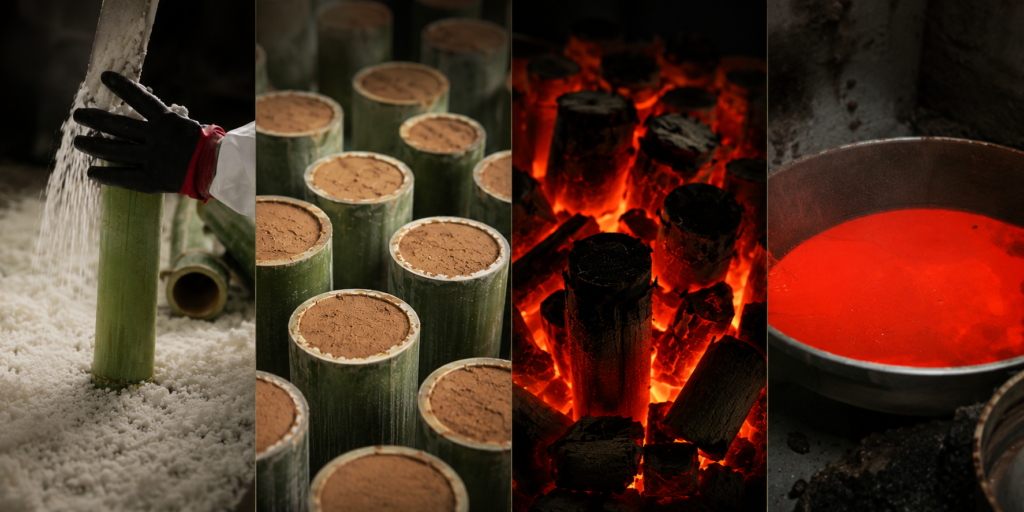
source : Insan Bamboo Salt.
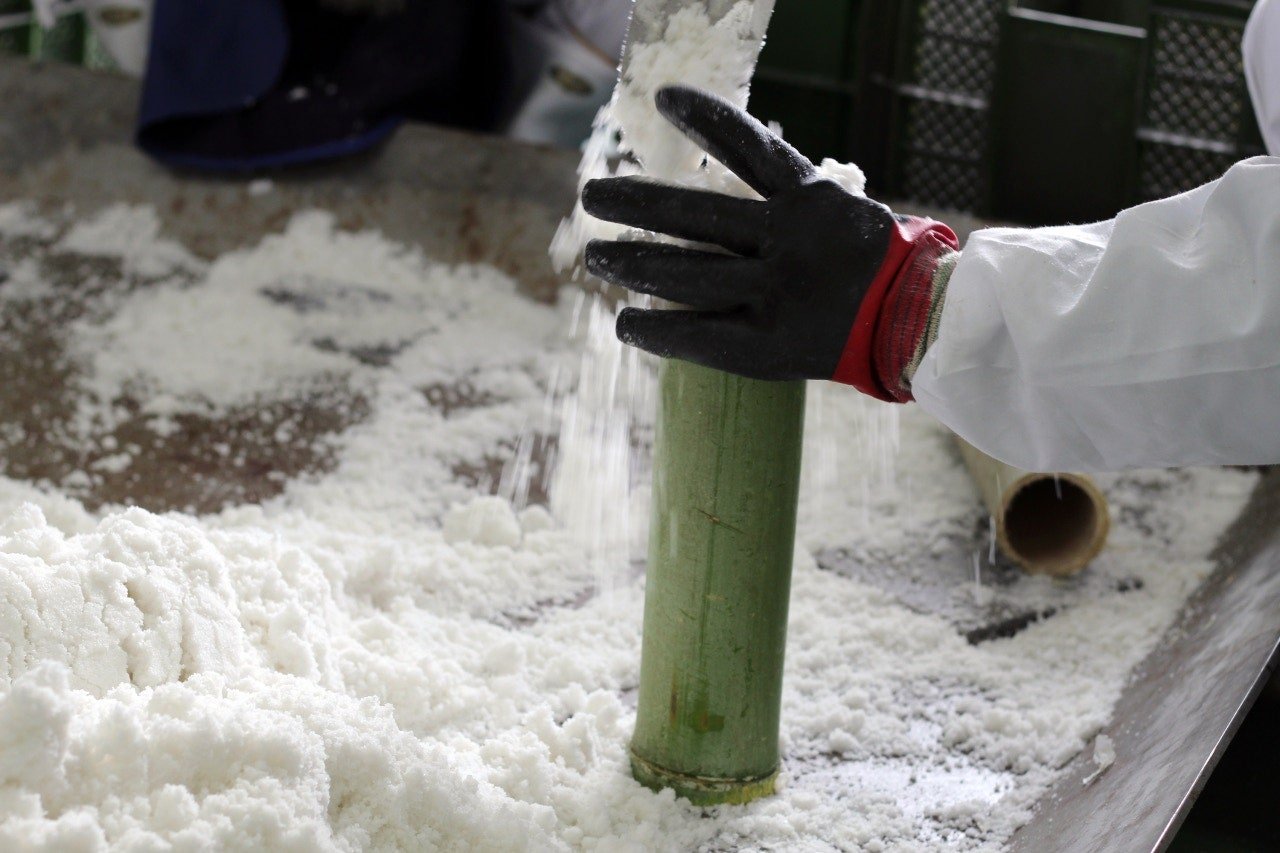
Packed by Hand Into Bamboo
Before firing begins, sea salt is carefully packed into sections of natural bamboo.
The bamboo tubes are then sealed using clay and prepared for repeated exposure to high heat.
Historically, this stage has been considered one of the defining characteristics of traditional Korean bamboo salt production—combining natural materials with labor-intensive preparation methods.
Unlike industrial refinement processes designed for speed and scale, bamboo salt production emphasizes repetition, structure, and controlled conditions.
Repeated High-Heat Firing
Once sealed, the bamboo tubes are exposed to repeated firing cycles under carefully managed heat conditions.
This process is performed multiple times and remains one of the most visually distinctive aspects of bamboo salt production.
The repeated exposure to fire gradually changes the appearance and structure of the salt over time, contributing to the deep-toned crystal form commonly associated with traditional bamboo salt.
For many consumers, the appeal lies not only in the ingredient itself, but also in the craftsmanship and process behind it.
A Tradition Preserved Through Generations
The bamboo salt method traces back to traditional Korean production practices that evolved over generations.
In the 20th century, Dr. Insan Kim (1909–1992) became closely associated with preserving and organizing these methods into a more structured production process.
Rather than modernizing the tradition through industrial shortcuts, the focus remained on maintaining consistency through repetition, heat, and natural materials.
Today, the tradition continues through small-batch production methods rooted in the same foundational principles.
Why Interest in Bamboo Salt Is Growing
As consumers continue exploring products connected to traditional craftsmanship and heritage-based production, bamboo salt has become part of a broader movement toward slower, process-focused categories.
Its appeal often extends beyond culinary use.
For some, it represents Korean cultural craftsmanship.
For others, it reflects an interest in products shaped through time-intensive methods rather than rapid industrial production.
In a market saturated with convenience-driven products, bamboo salt stands apart through a process defined by patience, repetition, and fire.
Learn More
Readers interested in traditional Korean bamboo salt production can explore additional information through the official Insan Bamboo Salt website and the Insan Medical information archive.
The Insan Bamboo Salt collection is also available through the brand’s official Amazon storefront.