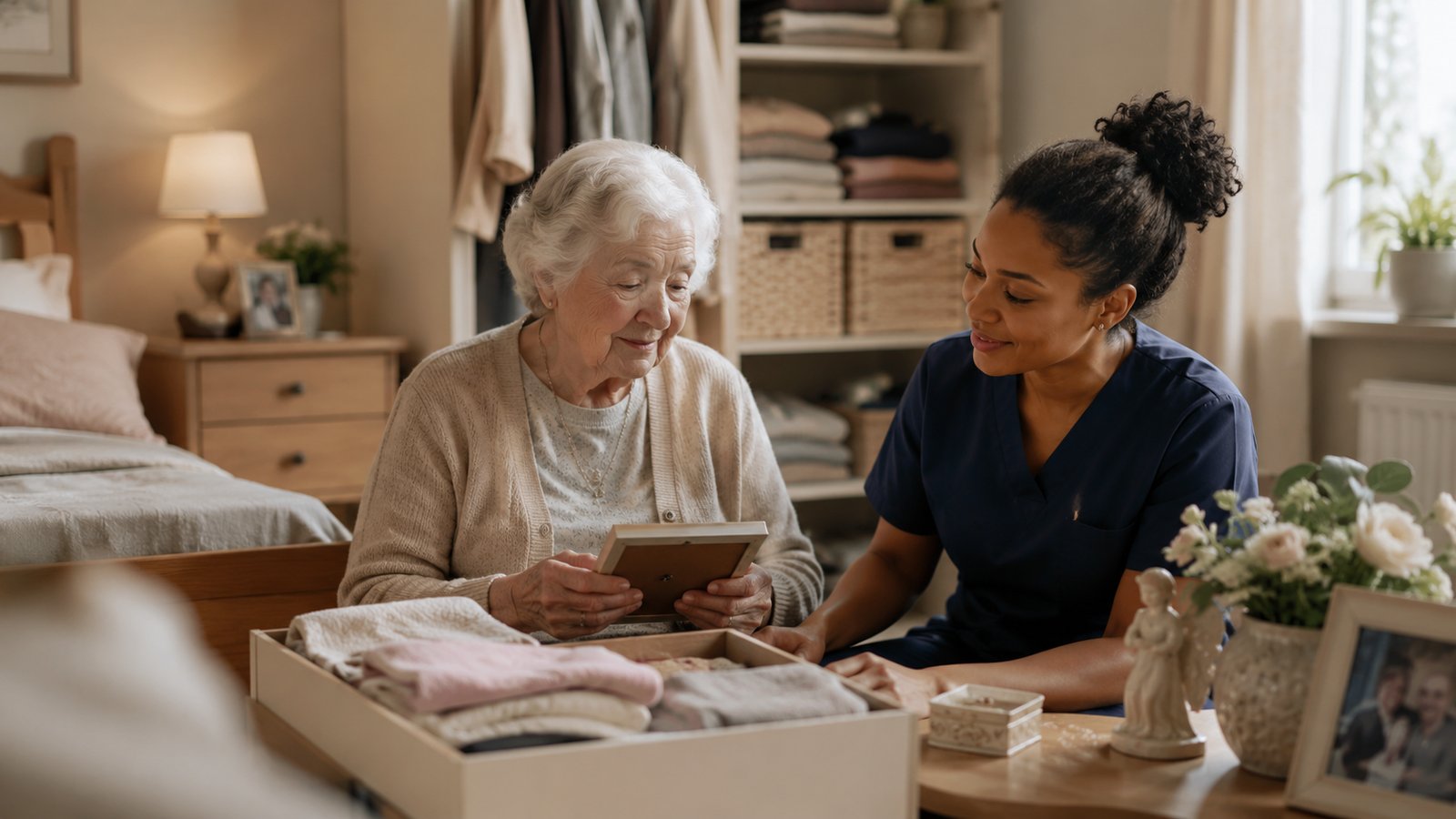
In care facilities, personal belongings are rarely just objects. They can hold decades of memory, identity and emotional security. Creating an orderly environment therefore requires more than efficiency—it demands an understanding of the people who live and work within it.
Long-term care facilities are not merely places where medical assistance and daily support are provided. For many older adults, particularly those living with serious illnesses or reduced mobility, these facilities become their primary living environment and the setting in which their personal lives continue.
Within these spaces, clothing, photographs, letters and small keepsakes can carry meanings that are invisible to others. A worn cardigan may recall a spouse. A faded photograph may preserve a family relationship. A seemingly insignificant container or ornament may represent familiarity in an environment where much else has changed.
This emotional attachment can make the organisation of personal belongings particularly complex.
Residents may no longer be physically or cognitively able to manage their possessions independently, yet they may strongly resist having those items moved, discarded or reorganised by someone else. What appears to staff as unnecessary clutter may represent continuity, security and personal identity to the person who owns it.
The challenge for care facilities is therefore not simply how to create a cleaner room. It is how to maintain safety and operational order without diminishing the resident’s dignity or sense of ownership.
When Personal Belongings Become Part of Care
Moving into a care facility can involve a significant loss of independence.
Residents may leave behind their homes, familiar neighbourhoods, established routines and many of the choices that once shaped their daily lives. Personal belongings often become one of the few remaining connections to their previous environment.
For this reason, efforts to organise a resident’s room can trigger anxiety, suspicion or resistance, even when the intention is to improve safety.
An object does not need to have financial value to hold emotional importance. Old clothes, framed photographs, handwritten notes and small souvenirs may function as anchors of memory. Removing or relocating them without careful communication can feel like an intrusion into the resident’s personal history.
Effective organisation in a care environment must therefore begin with recognition rather than removal.
The first question should not be, “What can be thrown away?” It should be, “What does this item mean to the person who owns it?”
The Hidden Burden on Care Workers
While residents’ emotional attachments deserve respect, care workers must manage the practical consequences of overcrowded or disorganised spaces.
Care professionals are responsible not only for physical assistance, hygiene, meals and medication-related routines, but also for helping residents manage clothing, personal-care items, documents and everyday possessions.
When these items lack designated places, staff may spend valuable time searching for essential objects. Clothing can become mixed with unused belongings. Frequently needed products may be buried beneath items that have not been touched for months. Walking routes may become obstructed, increasing the risk of falls or limiting access during urgent situations.
The familiar complaint—“Even after we organise it, the room quickly becomes untidy again”—is not simply an expression of frustration.
It reflects a more complicated reality in which memory, habit, emotional attachment, limited storage and poorly designed spaces intersect.
Without a system that residents and staff can realistically maintain, one-time cleaning efforts rarely produce lasting change.
Disorganisation Is Also a Safety Issue
In a care facility, clutter is not only an aesthetic concern.
Objects left on the floor can create fall hazards. Overfilled drawers may make necessary items difficult to locate. Excessive belongings near beds, mobility equipment or emergency access points can interfere with care delivery.
For residents with reduced vision, mobility limitations or cognitive impairment, even small obstacles can have serious consequences.
An orderly room also supports faster and more consistent care. When staff can immediately locate clothing, hygiene products, protective equipment or personal documents, they can spend less time managing objects and more time attending to the resident.
This is why organisation should be considered part of the facility’s care environment rather than a separate housekeeping task.
Organisation Services Require More Than Cleaning Skills
Professional organisation in long-term care facilities is fundamentally different from tidying an ordinary home or commercial space.
The work requires an understanding of care routines, resident behaviour, staff movement, safety priorities and emotional sensitivity.
A suitable service begins by analysing how the room is actually used.
Which belongings are accessed every day? Which items provide emotional comfort? What must remain within the resident’s reach? Which products are handled primarily by care workers? Where do staff repeatedly experience delays or inconvenience?
The answers can be used to create clear storage zones, improve movement routes and establish systems that are simple enough to maintain under real working conditions.
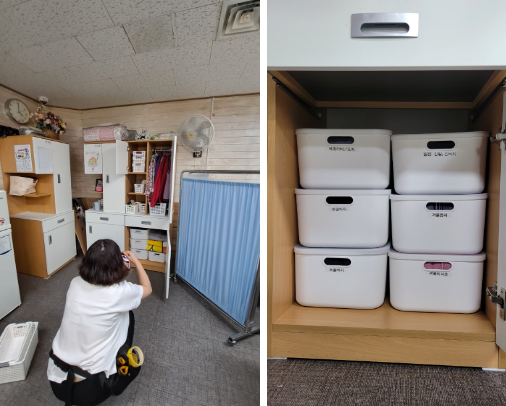
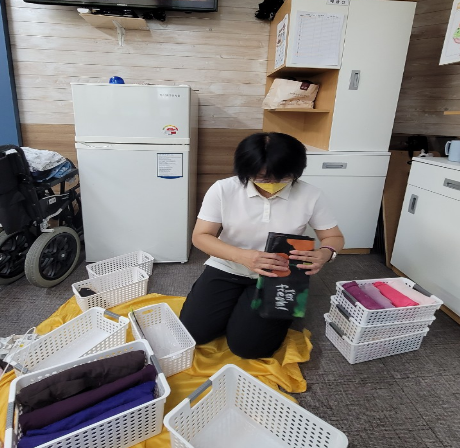
Frequently used items may be placed within easy reach. Personal keepsakes can be displayed safely rather than hidden away. Clothing can be divided by season or frequency of use. Staff-managed supplies can be separated from the resident’s private possessions.
The objective is not to impose visual perfection. It is to create a space that is safer, more understandable and easier to manage.
Preserving Dignity Through Participation
One of the most important principles in care-facility organisation is participation.
Whenever possible, residents should be involved in decisions about their belongings. Even those who require substantial support may be able to express preferences, recognise meaningful objects or indicate discomfort when something is moved.
This participation helps preserve a sense of control.
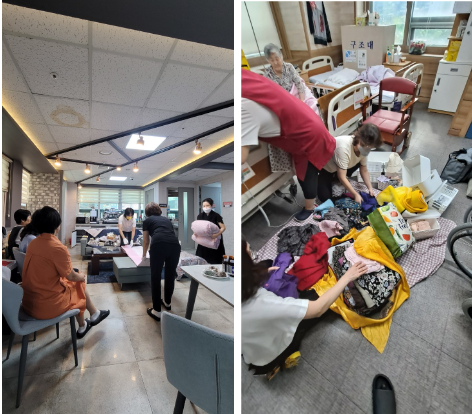
Rather than reorganising an entire room without consultation, staff and organisers can proceed gradually. Items can be grouped by purpose, photographs can be taken before changes are made, and important possessions can be assigned visible and consistent locations.
Family members may also provide valuable context. They can help identify emotionally significant objects, distinguish necessary belongings from accumulated items and explain routines that are not immediately apparent to facility staff.
A respectful organisation process does not erase a resident’s history. It makes that history safer and more manageable within the realities of a shared care environment.
Better Systems Allow Care Workers to Focus on Care
For care workers, a well-organised room can reduce repeated physical and emotional strain.
When storage locations are clearly defined, staff do not need to make constant individual judgements about where belongings should be placed. New employees can understand the system more quickly, and shift changes are less likely to result in confusion.
A maintainable structure also reduces the cycle of repeated tidying.
Without a clear system, workers may reorganise the same belongings again and again, only to see the space return to its previous condition. This repetition consumes time and can create tension between staff and residents.
By contrast, a system designed around actual habits is more likely to endure.
The goal is not to force residents to adapt to an unfamiliar model of order. It is to create an arrangement that reflects their routines while supporting the practical needs of those providing care.
From a One-Time Service to a Shared Habit
The long-term value of organisation services depends on what happens after the initial intervention.
A professionally arranged room can quickly become disordered again when residents, families and staff do not understand how the system is intended to work.
Facilities therefore need more than a one-time organising service. They need education that helps all participants build and sustain practical habits.
Simple visual labels, easy-to-understand categories and consistent storage locations can support residents with memory difficulties. Staff training can explain which belongings should remain accessible, which areas must stay clear and how to involve residents in daily maintenance without creating unnecessary conflict.
Families can also be guided on what to bring into the facility and how frequently personal belongings should be reviewed.
Organisation becomes sustainable when it is treated as a shared care practice rather than the responsibility of one employee or an outside specialist.
A Small Operational Change With Human Consequences
The organisation of personal belongings may appear to be a modest issue compared with medical treatment, staffing or facility management.
In practice, however, it affects all of them.
A safer room can reduce physical risk. A predictable environment can ease anxiety. Clear storage can improve staff efficiency. Respectful handling of personal possessions can preserve identity and trust.
For residents, professional organisation can create a living space in which their attachments are acknowledged rather than dismissed.
For care workers, it can reduce the time and frustration associated with repeatedly managing disordered belongings.
For the facility, it can strengthen operational consistency and contribute to a more dignified standard of care.
The Future of Care-Space Organisation
What long-term care facilities need is not simply better tidying techniques.
They need services and education that help residents, families and care workers develop sustainable habits together.
The most effective approach recognises that order cannot be imposed without understanding. It must be designed around memory, behaviour, safety and daily care routines.
Changing a space is ultimately an act of understanding the people who live within it.
When personal attachment is respected and staff realities are taken seriously, organisation becomes more than a matter of appearance. It becomes a practical expression of dignity, empathy and better care.
Written by Kang Jin-sook, Head of Division : ECO SPACE