
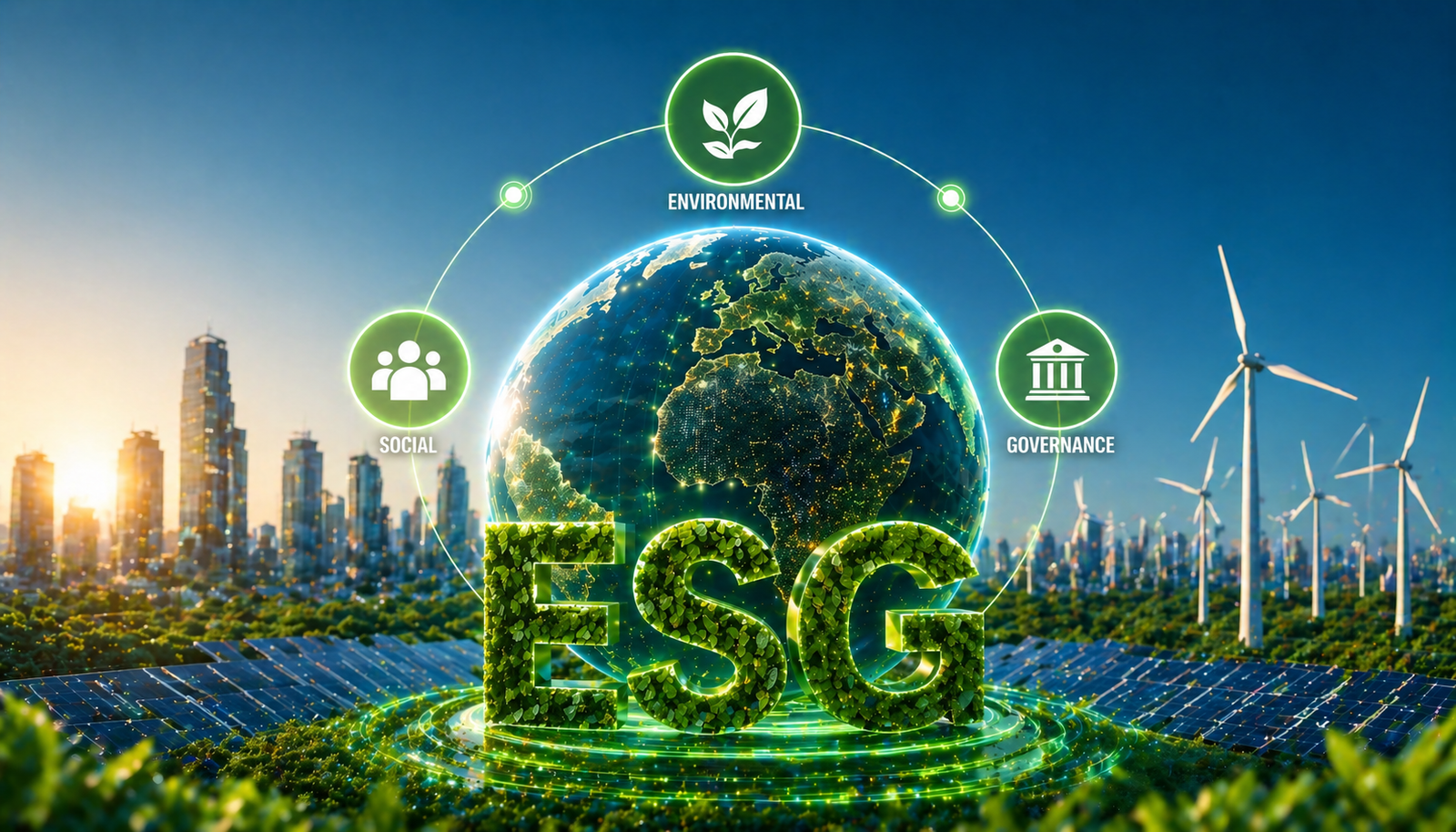
EU sustainability rules and supply chain laws are reshaping global business practices, pushing companies to integrate ESG reporting with UN development goals.
By K-MULBIT NEWS & HUB -Global Sustainability Desk
April 29, 2026
Seoul — Environmental, Social and Governance (ESG) standards are becoming a core requirement for businesses worldwide, as regulatory frameworks expand in Europe and extend across global supply chains.
The shift reflects growing alignment among regulators, investors and multinational corporations, positioning ESG as a central component of corporate governance and long-term risk management.
— K-MULBIT NEWS & HUB Editorial Team
European Regulations Drive Global Adoption
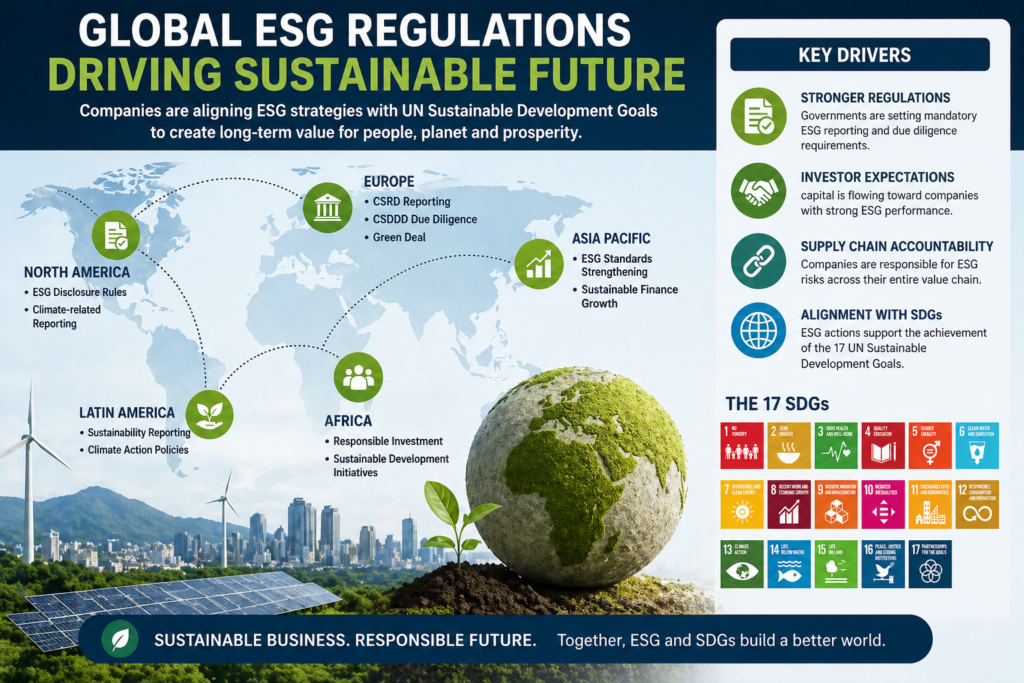
The European Union has introduced several policies aimed at strengthening corporate accountability in sustainability.
The Corporate Sustainability Reporting Directive (CSRD) requires companies to disclose detailed information on environmental, social and governance performance, significantly expanding the scope of non-financial reporting, (Source : The European Commission)
In addition, the Corporate Sustainability Due Diligence Directive (CSDDD) mandates that companies identify and address human rights and environmental risks across their operations and supply chains. (Source : The European Commission)
These measures are designed to promote transparency and responsible business conduct across global markets.
Importantly, the scope of these regulations extends beyond Europe. Companies outside the EU may also be subject to compliance requirements if they operate in or export to the region. (Source : Industry analysis)
Supply Chain Compliance Extends to Smaller Firms
ESG expectations are increasingly extending beyond large corporations to include suppliers and small and medium-sized enterprises (SMEs).
Major companies are incorporating ESG criteria into procurement processes, requiring suppliers to provide sustainability data and demonstrate compliance with environmental and social standards.
Regulatory frameworks also introduce enforcement mechanisms, with potential financial penalties for non-compliance, including fines tied to revenue levels. (Source : Compliance and risk advisory reports)
Industry analysts note that this shift is accelerating ESG adoption across entire value chains, particularly in export-driven economies.
ESG Influences Investment and Market Access
ESG considerations are also playing a larger role in global investment decisions.
Global ESG-related investment assets have exceeded tens of trillions of dollars, reflecting strong demand for sustainability-focused investment strategies. (Source : Industry and consulting estimates)
Analysts say ESG performance is increasingly linked to corporate valuation, access to capital and long-term competitiveness.
— K-MULBIT NEWS & HUB Editorial Team
Alignment With UN Sustainable Development Goals
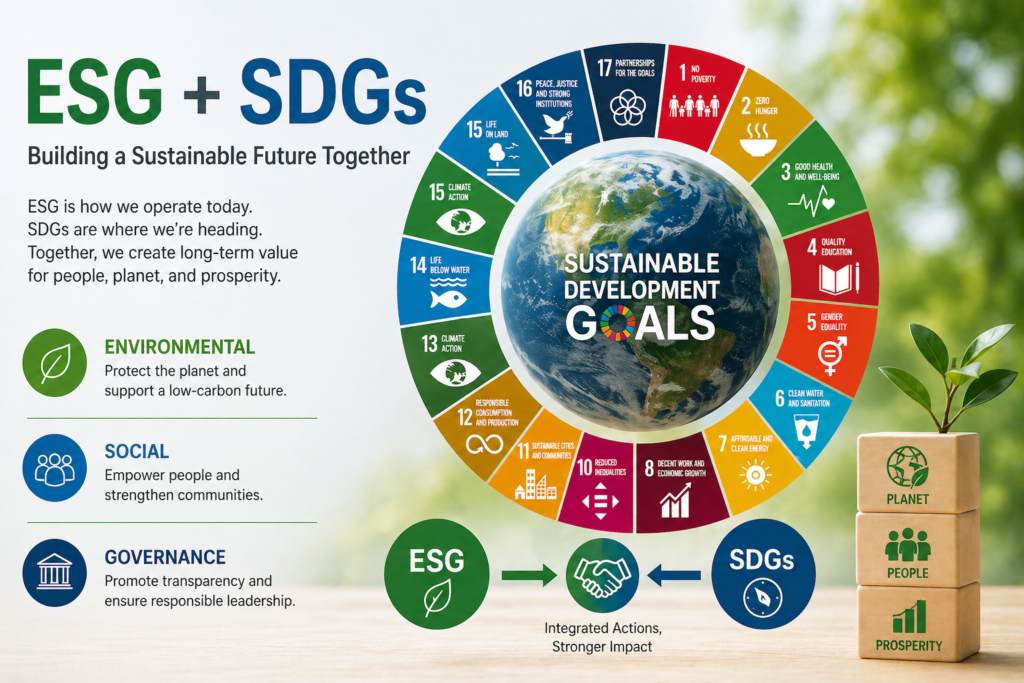
Companies are also aligning ESG initiatives with the Sustainable Development Goals (SDGs) established by the United Nations.
The SDGs define 17 global priorities addressing climate action, economic growth and social inclusion. (Source : the United Nations)
While ESG focuses on corporate-level measurement and reporting, SDGs provide a broader framework for global sustainability.
As a result, many organizations are linking ESG disclosures to SDG targets to demonstrate how their operations contribute to global development outcomes.
The integration of ESG and SDGs is increasingly recognized as a practical approach to translating global sustainability goals into measurable corporate actions. (Source : the United Nations and global policy organizations)
Toward Integrated Sustainability Strategies
The integration of ESG and SDGs reflects a broader shift toward comprehensive sustainability strategies.
Companies are developing internal systems that combine regulatory compliance, supply chain management and long-term impact planning. This includes aligning ESG reporting with international standards and embedding sustainability into core business operations.
Industry experts note that ESG is evolving beyond compliance into a strategic framework that supports long-term resilience and growth, according to sustainability policy analysis.
Outlook
As ESG regulations continue to evolve, companies across industries are adapting to new expectations from regulators, investors and business partners.
The convergence of ESG frameworks and the United Nations SDGs is expected to remain a key factor shaping corporate strategy and global economic development.
Reporting & Editing by K-MULBIT Global Sustainability Desk
Contact: k-miracle@k-miracle.net